Loading...
Serving Anchorage, AK and surrounding areas. (907) 202-5481
Most Anchorage garage floors fail early because they were poured with the wrong mix or the wrong base. We build yours to survive the freeze-thaw cycles, road salt, and frost heave that define Alaska winters.
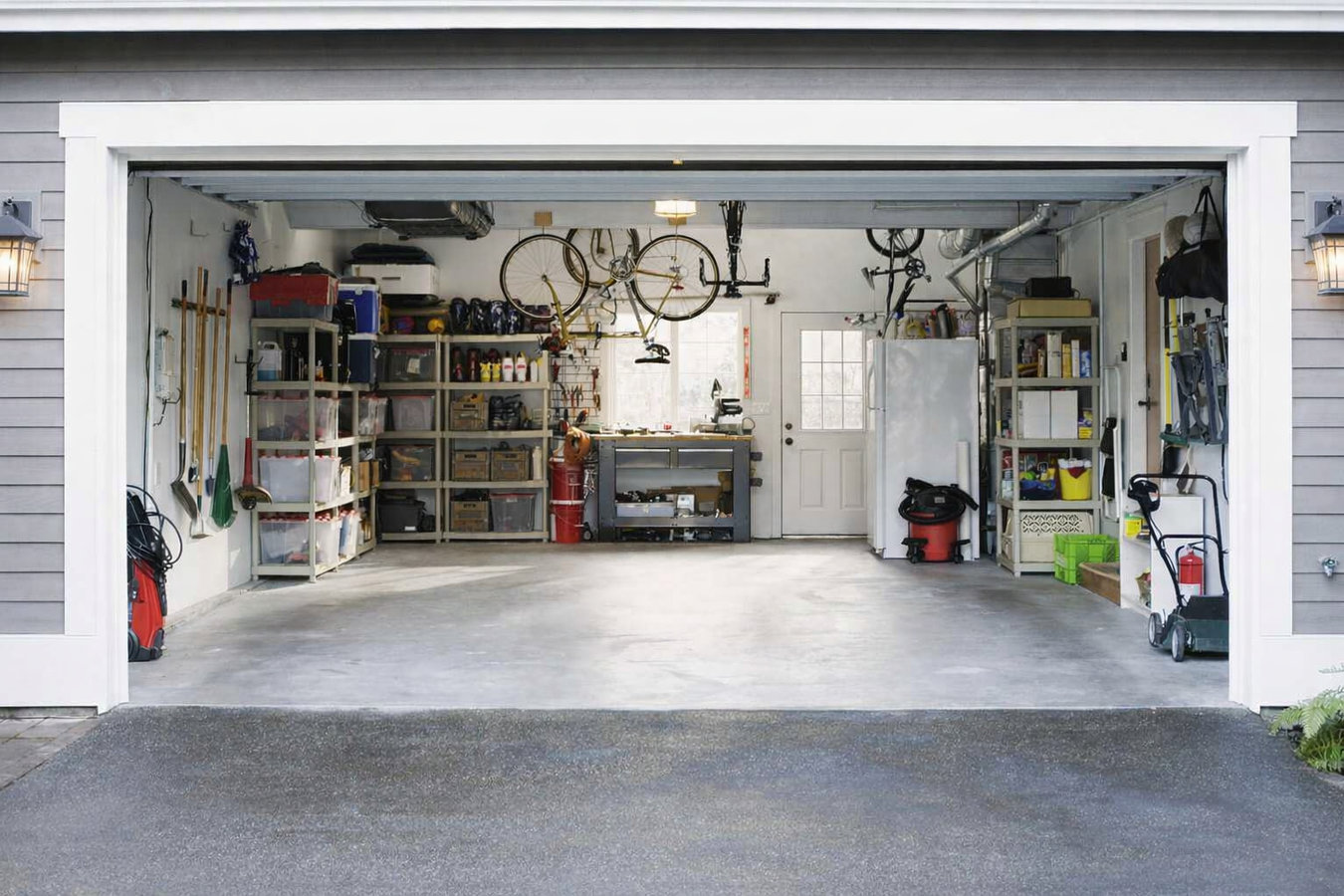
Garage floor concrete in Anchorage starts with removing the old slab, compacting a proper gravel sub-base, and pouring fresh concrete - most jobs take two active work days plus a curing period before you can park again.
The garage floor is one of the hardest-working surfaces in an Anchorage home. Every winter it absorbs road salt, snowmelt, gravel, and the weight of vehicles that have been sitting in minus-20 temperatures. Most floors that fail early were poured without a mix designed for this climate or with a sub-base that was too shallow to handle frost heave. Getting it right the first time is much cheaper than replacing a failed slab.
Many homeowners also combine a garage floor project with decorative concrete finishes or concrete floor installation in adjacent spaces to get everything done in one mobilization.
Thin layers of concrete lifting off in chips or sheets - especially near the garage door where snow and slush collect - are a sign of freeze-thaw damage or de-icing chemical exposure. In Anchorage, this kind of surface breakdown accelerates with each winter rather than stabilizing. Once flaking begins, it tends to spread across the floor.
Small hairline cracks in any concrete slab are normal. But cracks wider than a credit card, cracks that have grown over time, or cracks where one side sits higher than the other signal more serious movement underneath. In Anchorage, frost heave pushing up from frozen ground is a common cause of uneven cracking.
A properly poured garage floor is slightly sloped toward the door so water drains out. If you see puddles forming in the middle or corners after you wash the floor or snow melts off your car, the floor has either settled unevenly or was never poured with the right slope. Standing water accelerates surface damage and can seep under walls.
If you knock on your garage floor and hear a hollow sound in certain spots, or if the surface feels slightly springy underfoot, the concrete may have separated from the sub-base. This can happen when frost heave repeatedly lifts and drops the soil underneath over many winters. A hollow slab is far more vulnerable to cracking under vehicle weight.
We handle everything from full slab replacements on homes that have never had a proper floor to new pours on bare ground for newly framed garages. Every project starts with an honest assessment of what the sub-base actually needs, not a best-case estimate that surprises you on pour day. For homeowners who want to upgrade the surface, we can pair the pour with a decorative concrete finish - epoxy coatings, exposed aggregate, or a smooth trowel finish that is far easier to clean than raw concrete.
If your project also involves interior spaces beyond the garage, our concrete floor installation service covers basements, utility rooms, and additions. Handling both in a single mobilization saves scheduling time and often reduces cost. The American Concrete Institute publishes cold-weather concreting guidelines that shape how we approach every pour in Anchorage.
Ideal for garages without an existing floor or properties where the old slab has failed completely.
Best when the existing floor has severe cracking, frost heave damage, or settling that makes repair impractical.
Suited for homeowners who want a durable, easy-to-clean surface that resists road salt and daily grit.
Right for garages housing trucks, boats, or heavy equipment that exceed standard residential load expectations.
Anchorage temperatures regularly swing from well below zero in January to the 60s in summer, and that repeated freezing and thawing is the main reason garage floors here fail faster than in most of the country. Water seeps into tiny surface pores, freezes, expands, and slowly breaks the surface apart - a process called spalling. Using a concrete mix with the right air-entrainment and water-cement ratio is not optional here; it is the difference between a floor that lasts 30 years and one that starts flaking by spring. Road salt tracked in from Anchorage streets adds another layer of chemical attack on any surface that was not properly sealed.
Frost can push several feet into the ground in Anchorage, and a sub-base that is too shallow or too poorly drained will allow ice to lift the slab from below - cracking it and separating it from the walls. This is a common problem in older Anchorage garages and in areas like Wasilla and Palmer where the ground freezes deeply and the frost season is long. Proper sub-base depth and drainage are what separate a floor that survives Alaska winters from one that needs replacing in five years.
We ask a few questions - garage size, whether there is an existing slab, what you use the space for - and reply within one business day. Most projects in Anchorage require a site visit before we can give a firm price.
We visit, check the sub-base conditions and drainage, and give you a written estimate that breaks out demolition, base work, the pour, and any finishing. This is the time to ask about cold-weather protocols and scheduling.
You empty the garage completely. We handle demolition and hauling away the old slab if there is one, then grade and compact the gravel base. The actual pour usually happens in a single morning.
You can walk on the floor after 24 to 48 hours, but we recommend waiting at least seven days before parking - longer in cold Anchorage temperatures. We walk the finished floor with you before closing out the job.
We reply within one business day. No obligation, no sales pitch - just a clear answer and a written estimate if you want one.
(907) 202-5481We specify concrete mixes with air entrainment and proper water-cement ratios for Anchorage freeze-thaw conditions. This is not the same mix used in Seattle or Denver - and using the wrong one is how floors start flaking within two winters.
Frost can push several feet deep in Anchorage, and a slab on a poorly prepared base will not survive it. We compact a properly graded gravel layer that drains water away before it can freeze and heave underneath your floor.
We do a thorough site visit before quoting so there are no sub-base surprises on pour day. Your written estimate reflects what we actually found on your property - not a best-case guess revised upward after the crew arrives.
We carry a current Alaska contractor license verifiable through the State of Alaska Division of Corporations, Business and Professional Licensing. Proof of liability insurance and workers' compensation is available before anyone sets foot on your property.
Every one of these details compounds. A cold-climate mix on a properly prepared sub-base, sealed and cured correctly, produces a floor that holds up for decades. Skipping any one of them is how floors fail early - and how homeowners end up paying twice.
Add color, texture, or a polished finish to any new or existing concrete surface.
Learn MoreInterior concrete floor work for basements, additions, and utility spaces.
Learn MoreAnchorage's concrete season is short - reach out now to secure your spot on the calendar before summer books up.