Loading...
Serving Anchorage, AK and surrounding areas. (907) 202-5481
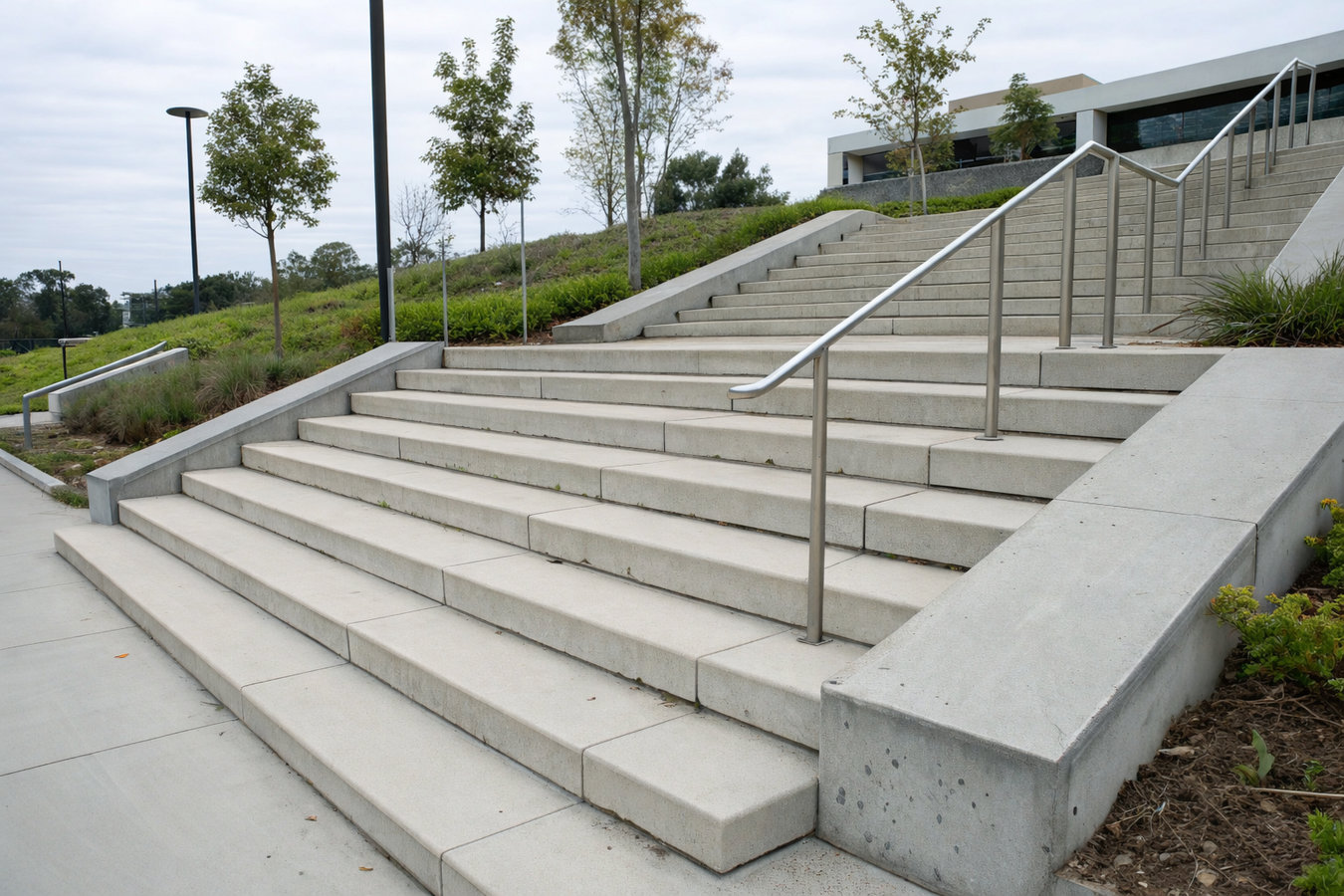
Cracked, tilted, or crumbling steps are a safety hazard - especially in Anchorage winters. We build new concrete steps that stay level, drain properly, and hold up through decades of freeze-thaw cycles.
Concrete steps construction in Anchorage involves removing old steps if needed, excavating and compacting a stable base, building wooden forms in the shape of the finished staircase, pouring concrete with steel reinforcement, finishing the surface for grip, and sealing before the first winter. Most residential step projects take one to two days of active work, with several days of curing before regular use.
In Anchorage, the base preparation matters as much as the concrete itself. The city sits on glacially deposited soils that shift significantly with the seasons, and steps that were not set on a properly compacted base will settle and crack within a few years - regardless of how good the pour was. This is the detail that separates a 30-year staircase from one that needs attention after the third winter.
If you are rebuilding the entry area of your home, you might also want to look at concrete sidewalk building to create a connected, consistent approach from the street to your door.
If you can see cracks running across the surface, or chunks breaking away from edges and corners, the structure has been compromised. In Anchorage, this kind of damage is almost always caused by water freezing inside the concrete over multiple winters. Once it starts, it tends to get worse quickly with each freeze-thaw season.
If any step shifts when you put your weight on it, or the whole staircase looks tilted, the base underneath has settled or eroded. This is a safety issue, not just a cosmetic one - a tilted step is a fall waiting to happen, especially when icy. Soil movement under steps is common in Anchorage's freeze-thaw environment.
Steps should be built with a slight forward slope so rain and snowmelt run off the front edge rather than sitting on the surface. Standing water will freeze in winter and create a slip hazard - and it will also accelerate freeze-thaw damage. This is often a sign the original steps were not built with proper drainage in mind.
If your home was built during Anchorage's 1960s to 1980s building boom and the original concrete steps are still in place, they have endured decades of freeze-thaw cycles without modern concrete mixes or protective sealers. Even if they look passable on the surface, older steps may have internal cracking or corrosion that is not yet visible.
We handle new step construction for homes being built or renovated, and full replacement projects where old steps have cracked, settled, or simply outlived their useful life. Every project includes proper demolition if needed, base excavation, steel reinforcement, and a finished surface with real grip for wet and icy conditions. For homeowners who want their entire entry area to match, we also offer concrete sidewalk building to connect your steps to the street or driveway.
If you are working on broader foundation or structural projects around your home, our slab foundation building service covers the heavier structural pours that steps often connect to. We coordinate across project types so the finished work looks and performs consistently.
Suits homeowners adding steps to a new home or outdoor structure - built from the ground up with proper forms, rebar, and base prep.
Suits homeowners with cracked, settled, or aging steps that have reached the end of their useful life and need full tear-out and rebuild.
Suits homeowners who want a safe, textured grip surface that sheds ice and water - the most practical finish for Anchorage winters.
Suits homeowners who want a decorative pattern or color in the concrete surface to complement their home's exterior.
A large share of Anchorage homes were built during the 1960s through 1980s building boom, meaning many original concrete steps are now 40 to 60 years old. Steps of that age have endured decades of Anchorage freeze-thaw cycles without the benefit of modern concrete mixes, air-entrainment, or protective sealers. Even steps that look passable on the surface may have internal cracking and rebar corrosion that becomes visible only after another hard winter. Replacement is frequently the more cost-effective path - and the safer one.
We work across the Anchorage area, including Palmer and Wasilla. The Alaska Division of Geological and Geophysical Surveys documents the frost-susceptible and unstable soils found across the region - conditions that directly affect how steps must be built to stay level and crack-free over time. We factor these local soil conditions into every base preparation decision we make.
When you reach out, we ask how many steps you need, whether existing steps need to come out, and your target timeline. We reply within one business day and schedule a site visit before giving any price - because the ground conditions, truck access, and staircase size all affect the cost.
If a building permit is required, we handle the application on your behalf. Once the permit is in hand and a start date is confirmed, you receive a clear timeline so you can plan around the entry being blocked.
We remove old steps if needed, excavate to a stable depth, and compact the soil or add a gravel base layer. This prep is the most important part of the job - it is what keeps steps from settling in Anchorage's shifting soils. Then we build the wooden form in the exact shape of your finished staircase.
Steel reinforcement goes in before the concrete is poured. The surface is finished with a textured grip finish, and if temperatures are expected to drop near freezing, we cover the fresh concrete with insulating blankets. After curing, we apply a protective sealer and walk the finished steps with you before we leave.
We provide written, itemized estimates before any work begins - no pressure, no surprise costs after the job starts.
(907) 202-5481We use air-entrained concrete mixes and insulating blankets when temperatures require it - standard cold-weather concreting practice that many contractors skip. Skipping it produces steps that look fine in summer and crack by spring.
Much of Anchorage sits on glacially deposited soils that shift as they freeze and thaw. We excavate to stable depth and compact the sub-base before any concrete is poured - this is what gives your steps a 30 to 50 year lifespan instead of a 5 to 10 year one.
Every set of steps we build gets a broom-finished or textured surface that gives real grip in wet and icy conditions. Smooth-finished steps are dangerous in Anchorage winters - we do not build them that way.
Your estimate breaks out demolition, materials, labor, permit fees, and sealing separately - before any work begins. The number you agree to is the number you pay, with no additions after the job starts.
The American Concrete Institute publishes the cold-weather concreting standards that guide how steps should be poured and protected in climates like Anchorage. We follow those standards and back every project with a walk-through before we leave the site.
Structural slab pours that your entry steps often connect to - built for Anchorage ground conditions.
Learn MoreConnect your new steps to the street with a continuous concrete sidewalk built to the same cold-climate standard.
Learn MoreAnchorage contractors book fast once the ground thaws - call (907) 202-5481 or request a free estimate now to lock in your start date.