Loading...
Serving Anchorage, AK and surrounding areas. (907) 202-5481
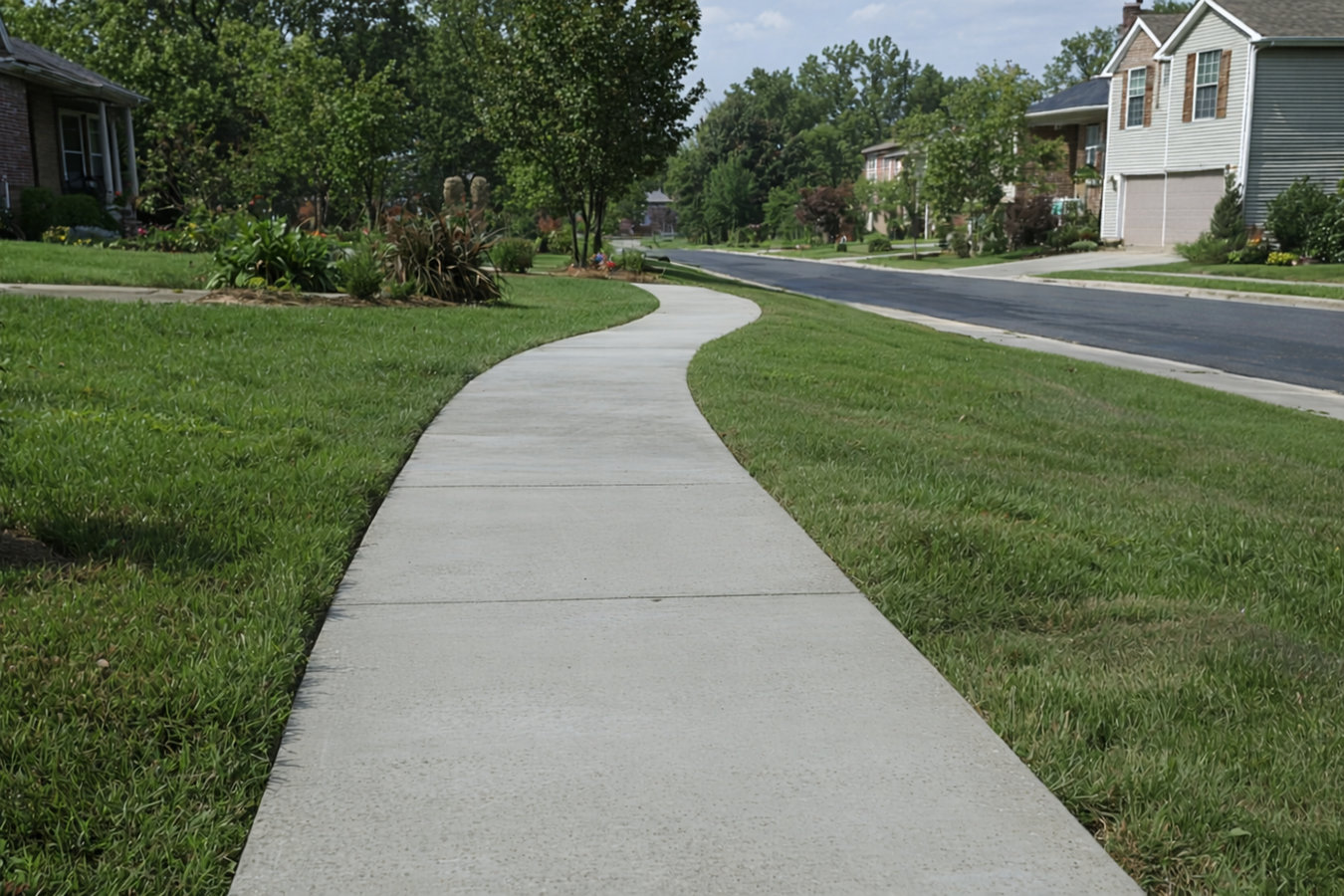
Cracked, heaved, or icy walkways are a safety problem every Anchorage winter. We build concrete sidewalks with the right base and cold-climate mix so they stay level and safe for decades.
Concrete sidewalk building in Anchorage means removing the old surface, preparing a stable gravel base, and pouring fresh concrete that cures into a solid, lasting walkway. Most residential jobs take one to three days of active work, with a 24-to-48-hour wait before the surface can be walked on. In Alaska, the concrete mix must include air entrainment - tiny air pockets that give the concrete room to expand when water inside it freezes, preventing the cracking and spalling that ruins ordinary sidewalks after just a few winters.
Heaved, cracked, or sloped-wrong sidewalks are among the most common calls we get in Anchorage. Freeze-thaw cycles push the ground up and down every season, and a base that was not built for local soil conditions will let that movement reach your slab. If you are also considering a concrete driveway or a garage floor, we can coordinate all three surfaces in the same season so the finished result looks consistent and cuts down on scheduling headaches.
Anchorage sidewalks that connect to public streets or city right-of-way require a permit from the Municipality before work begins. We handle that paperwork as part of every job - you do not need to contact the city yourself.
If sections of your walkway have shifted up or down relative to each other, that is a tripping hazard - and in Anchorage it is almost always caused by freeze-thaw movement in the soil underneath. Once a slab has heaved significantly, patching the surface will not fix the underlying problem. A full replacement is usually the right call.
If the top layer of your concrete is peeling off in chips or flakes each spring, that is called spalling - a sign the original concrete was not mixed or cured properly for Anchorage's climate. It gets worse every winter and eventually leaves the slab structurally weak. Catching it early and replacing the walkway costs far less than letting it deteriorate.
A well-built sidewalk sheds water away from your home. Puddles after rain or snowmelt, or water draining toward your foundation, mean the slope of your walkway is wrong. Pooled water freezes into a hazard in winter and is a long-term risk to your foundation - both problems a properly graded replacement solves.
Many Anchorage homes built in the 1970s through 1990s have original sidewalks poured before cold-weather concrete practices became standard. If yours is that old and showing any surface wear, it is worth having a contractor assess it. Catching problems before a full failure is almost always cheaper than waiting.
We build residential concrete walkways across Anchorage - front entry paths, side-yard connectors, driveway aprons, and full replacements of failed slabs. Every project starts with a soil assessment and base excavation sized to what your ground conditions actually require. If your new walkway connects to a concrete driveway, we match the thickness at the joint so the two surfaces move together rather than pulling apart over time.
For homeowners who want more than a plain gray surface, our garage floor concrete services use the same cold-climate mix and base preparation approach, so everything we pour on your property meets the same standard. The Portland Cement Association has published guidance on cold-weather concrete practices that informs the specifications we use on every Anchorage job. For sidewalks connecting to public streets, the Municipality of Anchorage right-of-way standards govern width, slope, and drainage requirements - we handle permit compliance on every qualifying project.
Homeowners who want a safe, level path from the street or driveway to the front door that stays ice-free and drains correctly.
Properties where foot traffic routes around the home need a defined surface that holds up better than gravel or pavers in freeze-thaw conditions.
Areas where the sidewalk meets the driveway or garage need extra thickness and proper drainage to handle vehicle crossings without cracking.
Homes with existing concrete that has shifted, spalled, or become a tripping hazard after years of Alaska winters.
Anchorage's freeze-thaw cycles are severe - frost can penetrate six feet or more into the ground in some neighborhoods, and the repeated expansion and contraction of frozen soil is the primary reason sidewalks heave, crack, and fail here faster than in warmer states. A walkway poured without the right base depth and an air-entrained concrete mix will start showing problems within a few winters. Parts of Anchorage also sit on glacially deposited soils or ground affected by the 1964 earthquake that shift more than typical city soils - the Municipality of Anchorage maintains geotechnical mapping of these areas, and we account for those conditions when we assess your site. Homeowners in Knik-Fairview and Wasilla face similar soil and climate conditions, and we bring the same preparation standards to every job across the region.
Anchorage's construction season runs roughly May through September, which limits how many projects can be scheduled in a year. If your sidewalk is borderline - cracked in places but not yet a tripping hazard - it is worth having us assess it early in the season before the condition worsens. A sidewalk that fails over winter becomes a more disruptive and expensive replacement project the following spring, when every contractor in the city is already booked.
We respond within 1 business day and set up a free on-site estimate. Photos and rough measurements are not enough - we need to see your soil and drainage in person before we can give you an accurate number.
If your project requires a Municipality of Anchorage permit - common for sidewalks connecting to a public right-of-way - we handle the application before any work begins. Permit processing typically adds a few days to the timeline but protects your investment.
We break out the old concrete, haul it away, and excavate to the depth your soil conditions require. A compacted gravel sub-base goes in next - this step is invisible once the concrete is poured, but it is what keeps your walkway level through years of freeze-thaw cycles.
Concrete is poured and finished in one session - broom finish for traction, control joints cut or tooled in at regular intervals. We sometimes cover the fresh slab with insulating blankets overnight if temperatures are expected to drop. Before we leave for the final time, we walk the finished sidewalk with you.
We respond within 1 business day - no obligation, no pressure. After you submit, someone from our office calls to schedule a free on-site estimate at a time that works for you. We assess your soil, review any permit requirements, and give you a written quote covering every part of the job.
(907) 202-5481We use a concrete mix with tiny air pockets built in - this gives the concrete room to expand when water inside it freezes, which dramatically reduces cracking and spalling over many winters. This is standard practice on every sidewalk we pour, not an upgrade.
We pull all required Municipality of Anchorage permits before work starts, including right-of-way permits for sidewalks connecting to public streets. You do not make a single call to the city. The American Concrete Institute standards for cold-weather concrete inform our pour specifications on every job.
Parts of Anchorage - particularly lower-lying neighborhoods and areas affected by the 1964 earthquake - have soils that shift more than average. We assess your specific conditions before recommending base depth and drainage approach, so your sidewalk stays level rather than heaving within a few seasons.
You receive a written estimate covering every cost before we start. Anchorage's short construction window means we schedule realistically and show up when we say we will - so your project is finished before the season closes, not pushed to next spring.
Sidewalk work in Anchorage is not complicated, but it does require getting the details right - the right mix, the right base, and the right permits. When all three are handled correctly from the start, you get a walkway that is still level and safe a decade from now.
Connect your new sidewalk to a freshly poured garage floor - built to the same cold-climate standards for a seamless finished exterior.
Learn MoreReplace an aging driveway alongside your new walkway for a complete exterior update that holds up through Anchorage winters.
Learn MoreConstruction spots fill fast once the ground thaws - reach out now so your walkway is finished before the season closes.